

May 20–21, 2026
The Wharton School
Philadelphia, PA
Wharton Human-AI Research hosted AI and the Future of Work, a two-day academic conference focused on how AI is reshaping the nature of work and employment. The conference convened at The Wharton School, bringing together leading scholars, industry researchers, and practitioners to examine emerging research, share empirical insights, and engage in critical dialogue on the evolving relationship between AI, organizations, and the workforce.
— Presenters —
Please note that not all presenters have papers available to share.
David Almog
PhD Candidate, Kellogg School of Management
Barriers to AI Adoption: Image Concerns at Work
James Alvarez Mourey
Associate Professor of Marketing, Associate Dean of Graduate Programs, DePaul University
“The AI Acceptance Gap: Identity-Based Judgments of AI-Assisted Work”
Anirudh Bajaj
Product Manager, Microsoft
“What Every AI Job Study Gets Wrong: A Framework for Predicting How Much AI Will Actually Transform Each Occupation”
Matt Beane
Associate Professor, UC Santa Barbara
Hedging with Talent: How Selection Under Uncertainty Reshapes Automation’s Workforce Effects
Seth Gordon Benzell
Assistant Professor, Chapman University Argyros College of Business and Economics
Automation Experiments and Inequality
Anandhi Bharadwaj
Professor, Emory University
Pricing of Multidimensional Skills in the IT Labor Market: Complementarities between AI and Traditional IT Skills
Michael Blank
Assistant Professor of Finance, Stanford University
The Household Impact of Generative AI: Evidence from Internet Browsing Behavior
Tommaso Bondi
Assistant Professor of Marketing, Cornell University
Skill Atrophy and AI Productivity Measurement
Bharat Chandar
Postdoctoral Researcher, Stanford University
“AI and Labor Around the World”
Wei Chen
Associate Professor, University of Connecticut
“The Missing Middle: Workflow Design as the Key to Effective AI Agents”
Kanghyun (Simon) Cho
PhD Candidate, Temple University
“When Code Writes the Coder: The Delegation-Validation Trap in Vibe Coding”
Sahiba Chopra
PhD Candidate, UC Berkeley
“Effort Opacity”
Andrea Contigiani
Assistant Professor, Ohio State University
“Entrepreneurship, Experimentation, and Generative AI: Evidence from ChatGPT”
Chris Dellarocas
Richard C. Shipley Professor of Information Systems, Boston University
“Does AI Reduce Employer Reliance on Master’s Degrees? Evidence from Labor Market Flows”
Paramveer Dhillon
Associate Professor, University of Michigan
Readers Prefer Outputs of AI Trained on Copyrighted Books over Expert Human Writers
Sorour Fatemi
Visiting Assistant Professor, Cal State Monterey Bay College of Business
“Do Large Language Models Gamble Like Humans? Risk Preferences, Episodic Memory, and Demographic Stereotypes in LLM Decision-Making”
Alex Fogelson
Research Assistant, MIT FutureTech
“The Rapid Growth of AI Foundation Model Usage in Science”
Morgan Frank
Assistant Professor, University of Pittsburgh
AI-Exposed Jobs Deteriorated Before ChatGPT
Sanchaita Hazra
PhD Candidate, University of Utah
Accepted with Minor Revisions: Value of AI-Assisted Scientific Writing
Zezhen (Dawn) He
Postdoctoral Associate, Sloan School of Management, MIT
“Mental Models and Personalization of Model Selection”
David Holtz
Assistant Professor, Columbia Business School
“The Diffusion of ChatGPT Within Firms: Evidence from Enterprise Usage Data”
Moh Hosseinioun
Postdoctoral Fellow, Kellogg School of Management
“Reorganization of Work: Evidence from Software Firms”
Xinlan (Emily) Hu
Postdoctoral Associate, Massachusetts Institute of Technology
“Designing Optimal Human-AI Collaboration Processes for Complex Decision Tasks”
Ben Hyman
Economist, UCLA
How Retrainable Are AI-Exposed Workers?
Brian Jabarian
Marks Fellow and Incoming Assistant Professor at Carnegie Mellon University, University of Chicago Booth School of Business
“Choice as Signal: Designing AI Adoption in Labor Market Screening”
Xi Kang
Assistant Professor, Vanderbilt University
“Working Alongside Algorithms: How Parallel AI Deployment Affects Mutual Fund Analysts’ Performance”
Daniel Keum
Professor, Columbia Business School
Positional Technology: Organizational Hierarchy and Employee Engagement with AI and Automation
Samsun Knight
Assistant Professor, University of Toronto
The Effect of AI on Marketing Employment: Evidence from 90M+ Online Employment Records
Aakriti Kumar
Postdoctoral Researcher, Kellogg School of Management, Northwestern University
Practicing with Language Models Cultivates Human Empathic Communication
Kevin Lee
Assistant Professor of Marketing, University of Michigan, Ross School of Business
Agentic Interactions
Brandon Lepine
PhD Candidate, UC Santa Barbara
Precision Proactivity: Measuring Cognitive Load in Real-World AI-Assisted Work
Junjie Luo
PhD Student, School of Medicine, Johns Hopkins University
“Can Agentic AI Learn from Experimental Data to Design Superior Interventions? Evidence from Patient Messaging”
Dalbert Ma
PhD Student, London Business School
“The System-Level Cost of Algorithmic Coordination”
Zilin Ma
Postdoctoral Fellow, Harvard Business School
“Entrepreneurial Problem Choice: Measurement and the Effects of Artificial Intelligence”
Benjamin Manning
PhD Candidate, Massachusetts Institute of Technology
“General Social Agents”
Cassandra Merritt
Postdoctoral Scholar, University of Notre Dame
Managers as Gatekeepers in the Age of AI
Leon Musolff
Assistant Professor, The Wharton School
Coding Agents: Adoption, Learning, and Productivity Effects
Jiarui (Jerry) Qian
PhD Candidate, University of Virginia
AI in the Lab: AlphaFold2’s Impacts on Human-Produced Knowledge
Adam Quinn
Postdoctoral Associate, Science History Institute
“The Past and Future of Digital Automation: AI’s Labor Impacts in Historical Context”
Neel Rakholia
Data Scientist, OpenAI
“The Diffusion of ChatGPT Within Firms: Evidence from Enterprise Usage Data”
Raphael Raux
Postdoctoral Associate, MIT Sloan
Human Learning About AI
Peyman Shahidi
PhD Candidate, Massachusetts Institute of Technology
Chaining Tasks, Redefining Work: A Theory of AI Automation
Neha Sharma
Assistant Professor, University of Pennsylvania
Generative AI Shifts Technical Knowledge Production Toward Recombinant Novelty
Fangchen Song
PhD Candidate, The University of Texas at Austin
“AI and the Skill Gap: Evidence from a Large-Scale Field Experiment”
Koleman Strumpf
Professor of Economics, Wake Forest University
How AI Reshapes Human Content Creation: The Case of Wikipedia
K. Sudhir
Professor, Yale School of Management
The Production-to-Orchestration Shift: How Generative AI Reorganizes Knowledge Work
Michelle Vaccaro
PhD Candidate, Massachusetts Institute of Technology
“Advancing AI Negotiations: A Large-Scale Autonomous Negotiation Competition”
Lei Wang
Assistant Professor, Indiana University Bloomington
When AI Supports Emotionally Demanding Service Work: Experimental Evidence from Customer Service Interactions
Qi Wang
Postdoctoral Associate, Questrom School of Business, Boston University
“When Does Clinical AI Substitute for Experience? AI Exposure, Medical Reasoning, and Workforce Flows in U.S. Hospitals”
Xiupeng Wang
Assistant Teaching Professor, D’Amore-McKim School of Business, Northeastern University
AI’s Job Shakeup: Analyzing the Uneven Impact of AI Adoption on Labor Demand
Zachary Wojtowicz
Postdoctoral Fellow, MIT
“Artificial Intelligence and the Reorganization of Work: Evidence from Software Firms”
Xingqi (Maggie) Ye
PhD Candidate, UC Berkeley
“Addicted to AI: How Generative AI Leads to Voluntary Work Intensification”
Alev Yildirim
Assistant Professor, Queens College, CUNY
“Organizational Exposure to Generative AI and Its Impact on Employee Satisfaction”
— Chaired by Wharton Faculty —

Robert Meyer
Frederick H. Ecker/MetLife Insurance Professor, Professor of Marketing
Faculty Co-Director, WHAIR

Daniel Rock
Assistant Professor of Operations, Information and Decisions
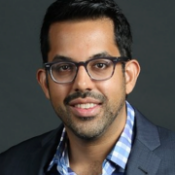
Prasanna (Sonny) Tambe
Professor of Operations, Information and Decisions
Faculty Co-Director, WHAIR
— Conference Team —

Traci Doyle
Senior Associate Director of Strategic Initiatives

Carol Heller
Program Coordinator

Schotland McQuade
Assistant Director of Events and Engagement
— Join us in 2027 —
Sign up for registration, speaker, and program updates.
Explore Sponsorship Opportunities
Event sponsorship opportunities are available. If you’re looking to elevate your brand and support our events, please contact Tania Rorke, Senior Associate Director of Corporate & Donor Engagement, for more information.
We would also like to extend a heartfelt thank you to our Corporate Members, who help make our events possible. To see the full list of companies, please visit our Corporate Member page.